Warzone Tactical 30 Kill PS5 Pro Run
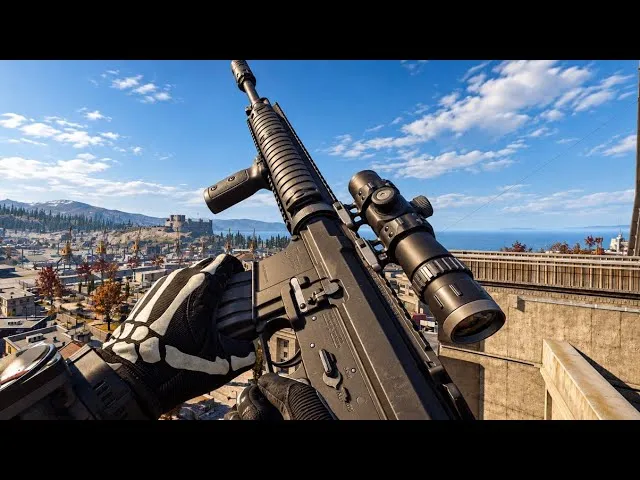
Video: CALL OF DUTY: WARZONE 30 KILL TACTICAL PS5 PRO GAMEPLAY! (NO COMMENTARY)
You can order the same kind of articles for your own video to boost it on YouTube and Google. Just message the Telegram bot @sat_sit_bot. Articles with your video embedded are written and posted by the bot itself — on popular topical sites (no ads). Free trial — 50 articles.
· based on the channel NoAnnoyingCommentary
Warzone is Call of Duty's free-to-play battle royale, and a 30-kill tactical run on PS5 Pro means a match built on deliberate positioning, controlled engagements and constant repositioning rather than reckless pushing. The NoAnnoyingCommentary upload shows that approach end to end: high kill count, no commentary, and every decision visible on screen for players who want to study movement instead of listen to talk. If you want to raise your own kill ceiling in Warzone, the useful part of a match like this is not the final number — it is the sequence of choices that produced it.
What a 30 kill tactical Warzone match actually looks like
A tactical match is defined by pacing, not by aggression level. The player still fights constantly, but each engagement starts from a prepared position: cover on one side, a known escape route on the other, and a rough idea of where the next threat comes from before the first shot is fired.
In practice that means three recurring behaviours:
- Rotating early into the next circle instead of reacting to it, which keeps the player ahead of third parties.
- Holding elevated or hard-cover positions near high-traffic lanes, so enemies walk into the fight rather than choosing it.
- Breaking contact after a knock or a kill instead of standing in the same spot to loot, because every gunfight in Warzone draws a second squad.
A 30-kill game is rarely 30 straight duels. It is usually a handful of multi-kill fights created by good positioning, plus a long tail of cleanups on players who are already rotating, healing or fighting someone else.
Loadout and gunfight discipline on PS5 Pro
PS5 Pro hardware matters here in a specific way: a higher, more stable frame rate makes tracking smoother during close-range strafing fights, and the difference is most obvious in smoke, indoors and during rapid target swaps. That does not replace aim skill, but it does mean the player can trust visual feedback more during a fast push.
The loadout logic behind a high-kill tactical run is usually built around one flexible primary weapon that works from mid-range to close-range, plus a secondary for finishing knocks or dealing with vehicles. Priorities worth copying:
- Recoil control over raw damage, because most kills happen at ranges where a stable pattern beats a harder-hitting one.
- Fast handling attachments for sprint-to-fire and aim-down-sight speed, which decide who wins a surprise encounter.
- A lethal and tactical slot that supports repositioning — smoke, stuns or snapshots — rather than pure damage.
- Perks and field upgrades that feed information, since knowing where the next enemy is worth more than a marginal weapon stat.
Positioning, rotations and circle timing
The single biggest difference between a 10-kill game and a 30-kill game in Warzone is rotation timing. Players who move early get to choose their fights; players who move late get chosen.
A workable rotation checklist for solo play:
- Read the next circle as soon as it appears and pick a destination, not just a direction.
- Move along the edge of the map or through low-traffic terrain where possible.
- Use vehicles for long rotations but abandon them before entering the final few circles, since they announce your position.
- Re-check the minimap every time you stop, because a stationary player is a target for anyone rotating past.
- Take height when it is free, but never trade a safe position for a contested rooftop without a reason.
Tactical play also means accepting skipped fights. A squad that is fighting inside a building is often more valuable as a distraction than as a kill, and letting them wear each other down frequently produces easier eliminations a minute later.
Solo Warzone: what changes without a squad
Solo Warzone removes the safety net of a revive, so every decision carries more weight. The tactical approach scales down cleanly: fewer, better fights; more time spent listening for footsteps and vehicle audio; and a stronger preference for ranged engagements where the player can break line of sight if things go wrong.
Useful solo habits:
- Carry enough utility to disengage, not just to attack.
- Track how many players remain and adjust aggression accordingly — the last ten players punish careless pushes far more than the first fifty.
- Use the gulag and buy stations deliberately, since a loadout drop early is worth more than a risky fight for loot.
- Rotate with the circle, not against it, unless the position you are leaving is already compromised.
Recurring questions from the Warzone community
Viewers of no-commentary Warzone runs tend to ask the same practical things: how a player reaches 30 kills without a squad, whether PS5 Pro hardware genuinely changes performance, and whether tactical play is boring compared to aggressive pushing. The short answers are that kill counts come from positioning and third-party timing rather than aim alone; that a more stable frame rate helps most in close-range tracking; and that tactical play is simply aggression with better timing — the player still takes every fight worth taking.
Another common thread is curiosity about other modes and maps. Warzone content sits alongside Zombies, DMZ-style extraction play and other shooters, and the same fundamentals — map knowledge, rotation discipline, weapon familiarity — transfer between them.
Final thoughts on the NoAnnoyingCommentary run
A 30-kill tactical Warzone match on PS5 Pro is a useful study piece precisely because nothing is explained for you: the rotations, the holds and the disengagements are all visible, and the kill count is the result of those decisions rather than of lucky lobbies. Watch it once for the fights, then watch it again for the movement between them — that is where the transferable lessons live. NoAnnoyingCommentary builds its channel around exactly this format, pairing Warzone uploads with Zombies, Spec Ops and GTA content, all without commentary so the gameplay stays the focus. For players trying to climb out of mid-table kill averages, copying two or three habits from a run like this is more effective than chasing a new weapon build.
Key takeaways
- The run is a 30-kill tactical match on PS5 Pro, uploaded by NoAnnoyingCommentary as a no-commentary video.
- Tactical pacing means deliberate repositioning and holding power positions instead of constant sprinting.
- PS5 Pro runs Warzone at higher and steadier frame rates, which sharpens tracking during close-range fights.
- The channel also covers Zombies, Spec Ops and GTA content alongside its main Warzone uploads.
- Solo Warzone rewards information discipline: UAVs, recon tools and audio cues matter more than raw aim.
Source: CALL OF DUTY: WARZONE 30 KILL TACTICAL PS5 PRO GAMEPLAY! (NO COMMENTARY) · Markdown version
Questions & answers
How do players reach 30 kills in a Warzone match?
High kill counts come from positioning and timing more than from raw aim. A tactical player rotates early, holds lanes where enemies are forced to pass, and third-parties fights that are already underway. That produces multi-kill sequences instead of isolated duels.
Does the PS5 Pro actually make a difference in Warzone?
The main benefit is a higher and more stable frame rate, which makes close-range tracking smoother, especially in smoke or indoors. It does not replace game sense, but it does make visual feedback more reliable during fast pushes and target swaps.
Is tactical play viable in solo Warzone?
Yes, and it is often stronger than pure aggression. Without a revive, solo players benefit from ranged engagements, escape utility and early rotations. Letting other squads fight each other frequently creates easier eliminations later in the match.
Why watch no-commentary Warzone gameplay instead of a guide?
A guide tells you what to do; a full match shows the timing. Watching rotations, holds and disengagements in real time lets you copy decision patterns rather than isolated tips, which transfers better to your own matches.